opener choices
Garage Door Opener Choices for San Jose Homes
Choosing a garage door opener for a San Jose home starts with the door, not the motor box. The opener should be matched to a door that is already balanced, travels smoothly, and has safe tracks, rollers, hinges, cables, and springs. If the door is heavy or crooked, a stronger opener is not the right fix. It can hide the symptom for a while and then fail harder. The safer sequence is to confirm the door system first, then compare drive style, rail fit, lighting, controls, backup power needs, and smart features.
San Jose garages vary widely. Some homes have short driveways and compact interiors where quieter operation matters because bedrooms sit above the garage. Others have detached or older garages where a simpler unit with clear manual controls may be enough. A service-area opener guide should reflect those real layout decisions without pretending every property needs the same premium equipment. The useful question is what the opener must do every day and what the existing door can support.
Belt-drive openers are often considered when quiet operation matters. Chain-drive units can be durable and familiar but may produce more sound and vibration. Wall-mount openers can clear overhead space in certain garages, but they require compatible door hardware and side clearance. Direct-drive and modern DC motor units may provide smoother starts and stops. These are general categories, not one-size-fits-all prescriptions. The right choice depends on the door weight, height, track condition, power location, and user needs.
Safety sensors remain a central part of opener reliability. If a door reverses at the floor, refuses to close, or flashes lights from the motor head, the issue may be sensor alignment, obstruction, wiring, travel settings, or door binding. Replacing the opener before inspecting those basics can waste money. A San Jose homeowner can safely check for obvious objects in the sensor path and note whether both sensor lights appear steady, but the repair path should stay cautious when the door itself is binding.
Battery backup can be useful in parts of the Bay Area where power interruptions would trap a vehicle or prevent normal access. That does not mean every opener discussion should become a scare pitch. The practical question is whether the garage is the main entry, whether there are manual access alternatives, and whether the household would be affected if the opener could not run during an outage. The answer helps decide whether backup power is a need, a convenience, or unnecessary for the current setup.
Smart controls deserve the same grounded approach. Phone alerts, remote close checks, camera accessories, and guest codes can be useful, but only if the door closes reliably and safely. A smart opener cannot correct bad door balance, damaged rollers, loose hinges, or a misaligned track. It can only automate commands. This guide keeps smart features in their proper place: helpful controls layered on top of a mechanically sound garage door system.
Lighting is another practical feature. A darker garage benefits from stronger built-in lighting or an accessory light module, especially when the garage functions as storage or a daily entry. LED compatibility matters because some bulbs can interfere with remote signals. If a remote has become unreliable after a bulb change, mention that detail before assuming the receiver or remote has failed. Small observations like that can save time during opener troubleshooting.
Noise complaints should be separated carefully. A grinding opener, rattling rail, squealing rollers, loose chain, worn hinges, and vibrating door sections can all sound like one problem from inside the house. Before choosing a quiet opener, it is worth identifying whether the noise comes from the motor, rail, rollers, hinges, panels, springs, or tracks. Replacing the opener will not silence rollers or a door that rubs in the track.
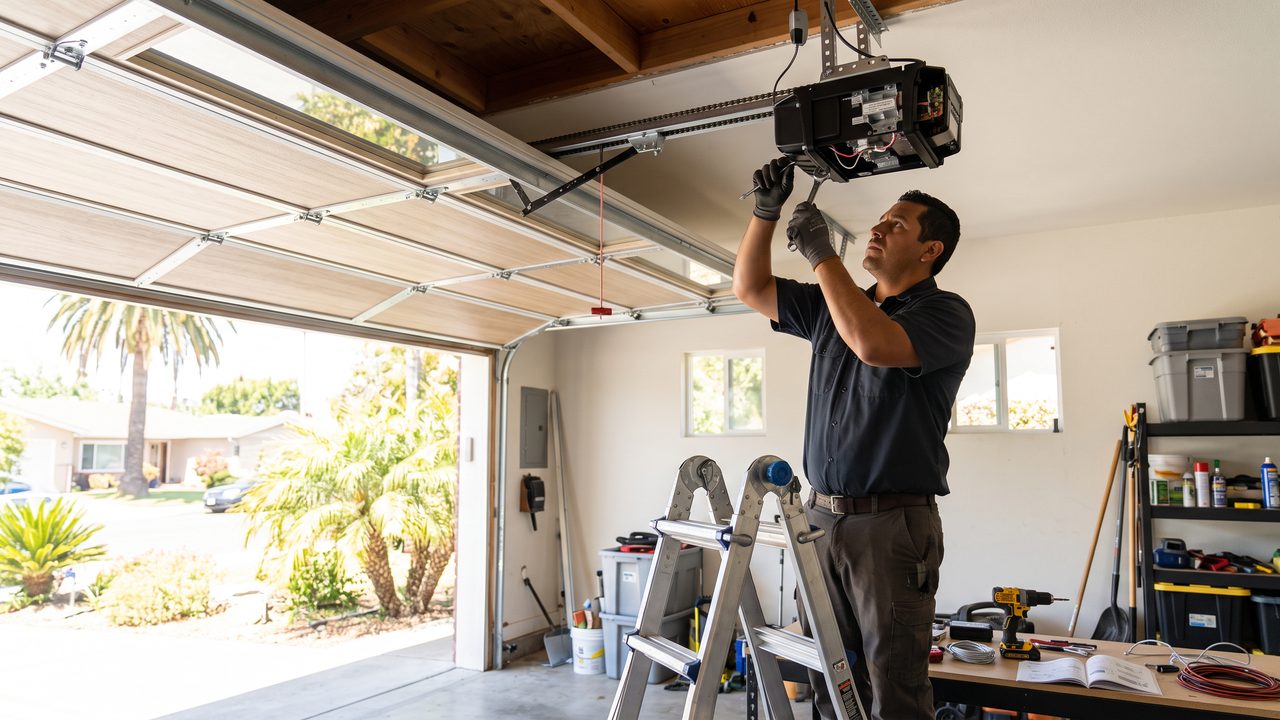
Installation quality matters as much as model choice. The header bracket, rail angle, opener arm, travel limits, force settings, sensor alignment, wall control, remote programming, and door balance all affect daily operation. A clean installation leaves the opener helping the door, not fighting it. That is why this site connects opener installation with spring, cable, track, roller, and safety inspection pages instead of treating the opener as an isolated appliance.
Homeowners should also ask what can be reused. Existing remotes, keypads, rails, safety sensors, and brackets may or may not be compatible with a new unit. Reusing the wrong parts can create unreliable operation, while replacing everything unnecessarily can raise cost. A careful opener conversation explains what is compatible, what should be replaced, and what is being kept. That is more useful than a generic promise that every opener installation is the same.
The service-area truth rule stays in place here too. San Jose Garage Doors lists the brand, phone, and South Bay coverage without inventing a storefront or fake review count. For opener content, that means the claims stay visible and supportable: opener repair, opener installation, remote/keypad help, safety sensor guidance, and connected garage door inspection. The page is designed to help a caller describe the problem accurately before scheduling.
When you call (408) 785-6114, describe the opener brand if visible, whether the wall button works, whether the remote works, whether the light flashes, how far the door moves, and whether the door sounds heavy. If the door is crooked, stuck open, or associated with a visible spring or cable problem, say that before discussing opener replacement. Those details protect the door and make the repair path clearer.
Before comparing opener models, confirm whether the current opener is truly the failed component. A remote that does not work may be a battery, programming, receiver, antenna, wall lock, LED interference, or power issue. A wall button that works while the remote fails points in a different direction from an opener that has no lights and no sound. A motor that runs while the door does not move may point toward a trolley, drive, gear, rail, or door-balance issue. Good troubleshooting separates control problems from mechanical door problems.
Drive style should match the garage environment. A belt-drive opener can make sense when living space is close to the garage and lower vibration matters. A chain-drive opener may be familiar and cost-conscious for some doors. A wall-mount opener may help when ceiling storage or high-lift configuration is part of the garage, but it is not automatically compatible with every door. A service conversation should explain the tradeoff instead of treating the most expensive option as the only professional answer.
Horsepower labels can be misleading if they are used without door context. The opener is not supposed to lift an unbalanced door. It should move a properly balanced door through a controlled cycle. A heavier door, taller door, insulated section, or older wood door may influence opener selection, but the spring system still carries the weight. If the door cannot be lifted safely by hand during professional testing, choosing a stronger motor is not the first fix. Door balance comes before opener size.
Backup power and smart controls should be chosen for real household use. If the garage is the primary entrance, battery backup may be valuable. If a household has frequent deliveries, temporary guest access or app alerts may matter. If a user wants fewer apps and fewer settings, a straightforward wall console and keypad may be better. A good opener recommendation respects how the garage is used instead of selling every feature to every homeowner.
Compatibility details matter during replacement. Existing rails, sensors, keypads, remotes, brackets, and wall controls may not work with a new motor head, even when the brand looks familiar. Some parts should be replaced for safety and reliability. Others can remain if they are compatible and in good condition. The homeowner should know what is being reused, what is being replaced, and why. That transparency helps prevent surprises after installation.
When an opener installation is finished, the test should include more than a button press. The door should open and close smoothly, reverse properly when required, stop at the correct limits, keep sensors aligned, and operate without unusual rail movement or top-section strain. The wall control, remotes, keypad, lighting, manual release, and any smart features should be explained in plain language. That closeout is what turns an opener into a dependable daily access system.
Opener replacement should also consider the condition of the door sections. A cracked top section, loose reinforcement bracket, or flexing panel can make a new opener pull against a weak point. That can shorten the life of the opener and worsen door damage. During an installation conversation, ask whether the top fixture, opener arm connection, and door reinforcement are appropriate for the door. This is especially useful on older doors or doors that have had repeated opener strain.
Remote and keypad planning is part of the decision too. Some households need multiple remotes, exterior keypad access, or temporary codes. Others prefer a simple wall button and one handheld remote. If smart access is added, the user should understand app setup, notification behavior, guest access, and what happens during internet or power interruptions. A good opener installation explains these controls without burying the homeowner in features they will not use.
The final choice should feel boring in the best way: the door moves smoothly, the opener is not fighting the hardware, controls are easy to understand, and safety devices are aligned. That result comes from matching the opener to the door and the household, not from buying a motor in isolation. If you are unsure whether the current symptom is opener-related, call (408) 785-6114 and describe the exact movement, sound, and control behavior before deciding on replacement.